
let go of my hand
just make railways

Hello everyone. Yet again, half a year gone by.
Today is nothing too complicated: allow me to recall the the story of when I first got glasses. It’s fairly long and ends up in a rant, but that’s…the brand? Anyways, without much further ado.
Let us call this “let go of my hand”.
Alt title: “glasses”.
Author’s Note: Hit play on the audio file as you read on. It’s part of the experience.
let go of my hand
chapter 1: clawing air
The year was 2014. I was 14 years old, only in my second year of high school. We have 5 years here, technically.
That year is the first time I remember having realized that if I sat in the back of the class, I could not see the board. I had to ask my classmates to copy their notes or switch their seat which would be closer to the front. The latter was not always possible due to school rules letting teachers mandate where we sat; it was effectively entirely up to the teacher. It’s their class. I didn’t quite understand what was wrong with my vision; I simply thought: I just see things this way. My vision isn’t bad, everyone must see this way. I thought that is why back-benchers performed the way they did: they couldn’t see the damn board!
Over the course of 2013 and 2014, my grades had been consistently slipping. I had gone from an A student to a B student teetering on sometimes getting Cs. It was a problem entirely new to my father used to having his kids get good grades, and that took a toll. I tried to fix it. I moved up front in class, made elaborate notes in styles that made sense to me, in contrast to classmates making notes in formatting dictated by after-school academies. I went up to instructors to ask them what I can do to be better.
This is where the problem begins. I do not know how much of that was impacted by the simple aspect of just not being able to tell what is happening on the board. All I can tell you is that it was a significant amount, because I remember often going home and being frustrated I’d copied board notes wrongly when I compared them with my friends. The humiliation of having read a word wrong again, and again, and again. Most teachers did nothing with my frustration visible, maintaining a professional level of decorum with me but not quite grasping what it was that made me so distracted in class. I’d shift around in my seat, squint at the board, ask consistently to be sat in the front. I got scolded a few times. It made me feel small, and only in hindsight does my heart really break and tears well up with full understanding of what was happening.
This is when I had the good fortune of being taught by an exemplary man in Sir Anwari.
Author’s Note: If you’re not from Pakistan or the subcontinent generally: we call our teachers Sir/Miss/Ma’am. It’s a colonial hangover, but I still don’t hate it. Sir Anwari might as well have been knighted by a hypothetical order.
He was an old man, in his 80s. He was teaching out of the school’s necessity, as they didn’t have anyone else that year to step in for us. Still, he was no meek frail man easily bullied: he could get deceptively loud, and managed to control class in a way only someone with such seniority can. It was an authentic bond between master and pupil we had to live up to, not simple grades. Even students who didn’t really try respected him. He taught us Islamiat that year - better known as Islamic Studies elsewhere - a subject mandated by the federal government of Pakistan alongside our national language, Urdu. Islamiat itself was a nightmare for me as it was quite simply just rote learning of Islamic history and concepts. That too, a state-cleared Sunni version of them. I couldn’t read two sentences in a row without losing track, let alone read them enough times to rote learn them. I used to call myself a ‘concepts’ student; now I realize I was just a kid with ADHD.
Sir Anwari used to make detailed notes to make rote learning easier for us. He immediately not only noticed that this Saad kid was effectively blind, but also that he learns things slightly differently. He adapted his notes to bullet points and to have more negative space on the pages (albeit he probably didn’t intend this part) for me to be less distracted. He positively reinforced me at every little step knowing I was a student with low academic esteem. It worked. During those months, I also turned 15.
And still, I couldn’t see the board. I remember the class where it finally clicked for him as to what was going on. I was sitting in the front but that day he had set up our class to be a bit distant from the board; we were doing some exercise that I don’t quite remember. Hence, despite sitting in the front, the distance was large enough for me to still not be able to discern scribbles on the board. Sir Anwari came up to me, and told me to stay back after class or to meet him in the office during the break – me being a meek student believed I had done something terribly wrong.
After class, I walked out into the hallway to see him waiting for me. With a tender hand on my shoulder, he said:
“Son, your vision’s quite weak.”
I didn’t quite know what to do in response, so he asked me some follow up questions regarding how I feel regarding my vision. He asked me if I wished it was better, and of course I responded yes. Who wouldn’t? That is when he said alright, fine – lets sort out your vision. He requested for my parents’ number. Due to the way he had just spoken to me, I felt no hesitation in handing him my parents’ number. I felt a strange sense of excitement, in fact. Can you imagine that? Being excited to give your teacher your parents’ phone number? A ridiculous concept. And yet!
A few days later I walked into classes bespectacled, with my classmates and friends fascinated. My friends who also wore glasses surrounded me and we discussed how bad our vision is, in addition to frames. My first ever frames were horrendous. I am now 25 years old and have been bespectacled for about forty percent of my entire life. In 2030 it’ll be half, and beyond that it will be a majority of my life spent bespectacled.
chapter 2: guard rails
The reason I talk about this story now is twofold.
First being: I happen to be in the shoes of an instructor in charge of university students for about 10 months every year. And yes: it really is that easy to notice a student is having difficulty focusing. Perhaps its easy for me as I know the patterns as well as myself, but it can not be that difficult. Primary in my reasons to speak about this is that bad vision is the most accepted disability. That is what it is: a disability.
Allow me to imagine a world without glasses:
I would live in constant fear of not knowing exactly what I’m seeing. No driving! I wouldn’t be able to type this out on my laptop without sticking my face to it. No cooking or any handling of blades. And yet, we only conceived of the idea in the late 10th century, with glasses only being created for practical usage in the 13th century. It is such a widespread disability that people with it have almost zero chance of going through life without glasses.
Now think of other disabilities. Mental disorders such as ADHD, learning disabilities such as dyslexia. Then you have those easier to understand: disabilities of the senses (deafness, muteness), physical disabilities (such as not being able to walk, missing limbs e.t.c.).

It would not be possible for me to see castles like this in the distance without my glasses. A simple joy stolen from me at no fault of mine.
Sir Anwari adjusted his teaching methods – and this was a man well into his life – to accommodate kids experiencing the slightest bit of difficulty in the subject. When a student comes up to me and tells me they are apologetic and feel like they can’t focus, it becomes MY problem. It is ridiculous that there are people in positions of power who simply wish to collect their wages and go on in life; you are in charge of people. If I am a manager and my employee comes up to me and says hey, I can’t quite understand what you said, could you please help me? You do it once. You do it twice. The third time you get frustrated because it is not your job, and you would be correct in assuming so. So, what is the answer?
The answer is not giving people attention every time they need help. You don’t push a person in a wheelchair around, or guide someone by hand if their vision is bad. You either get them a wheelchair that they can move themselves and create wheelchair accessible infrastructure or you get them glasses, respectively. It is possible that their disability won’t go away for life, and they’ll simply have to rely on accessibility tools.
When I discovered I had ADHD, I had to tackle the potential avenue of medication. I currently take prescribed stimulants daily to help me function. They don’t make my ADHD go away, nor do they make my symptoms vanish in the time they are active. I can see beyond the edge of my glasses sometimes, and I take them off to clean them during the day, so they work better. My glasses get taken off at the end of the day and I go to bed as Saad who has bad vision. My medication also wears off at the end of the day and I go to bed as Saad who has severe inattentiveness and hyperactivity in his mind. It is just who I am. And yet, I would have a complete lack of agency if I didn’t have these two simple things.
There is also the problem of the aids themselves potentially not existing yet. Stimulants, for example, only reduce your ADHD symptoms. Someone who is colour blind might still not be able to view the full range of colours with specialised glasses - that is just how it is. Some disabilities just haven’t had any aids developed yet. What you can do for them is just give them time and space. Teach them to forgive themselves. Sir Anwari’s simple change from text-intensive pages of notes to using more pages (hence more white/negative space) and bullet points (again, more space) led to me having better chances of focusing, and I did better. He also taught me to not feel angry at myself for losing focus. I sometimes wonder how different life would be if I received help for ADHD at that age, but it is the same as wondering if I got glasses before turning 15.
I have encountered multiple students who have had different learning experiences to the “regular” student, whether that be through disorders such as ADHD/Clinical Depression or simply through too much happening in their life. It is not difficult for me to go up to them (or shoot them an email) asking what I can do to help them fit better in class. Of course, not everyone responds kindly to being told they are having visible difficulties fitting into systems not made with them in mind. I, as a university instructor, have the agency to teach however I want. And yet: the administration still demands written exams. There’s limits to what I can do, but I can do all I can. A wheelchair climb a mountain not. It is cruel. Approaching people with kindness often yields the highest chance of seeing better responses - Sir Anwari honouring my privacy in my decision by asking me to talk to him in a private setting while also letting me talk (agency!) in addition to physical comfort (hand on my shoulder!) is the ideal example. Of course, I can’t do that in every case, but I try.
I want everyone to do well. I want them to truly own their experience; if it’s hampered by these things, they can’t. It ceases to be their university experience and more of their battle with their obstacles. That takes away your ability to truly live life, as you end up engrossed in battle with yourself.
chapter 3: let go of my hand
Agency is important. If someone’s agency is hampered due to a disability they have, those around them have a duty to make the world (a) more accessible to them and (b) create/find tools for them to access it.
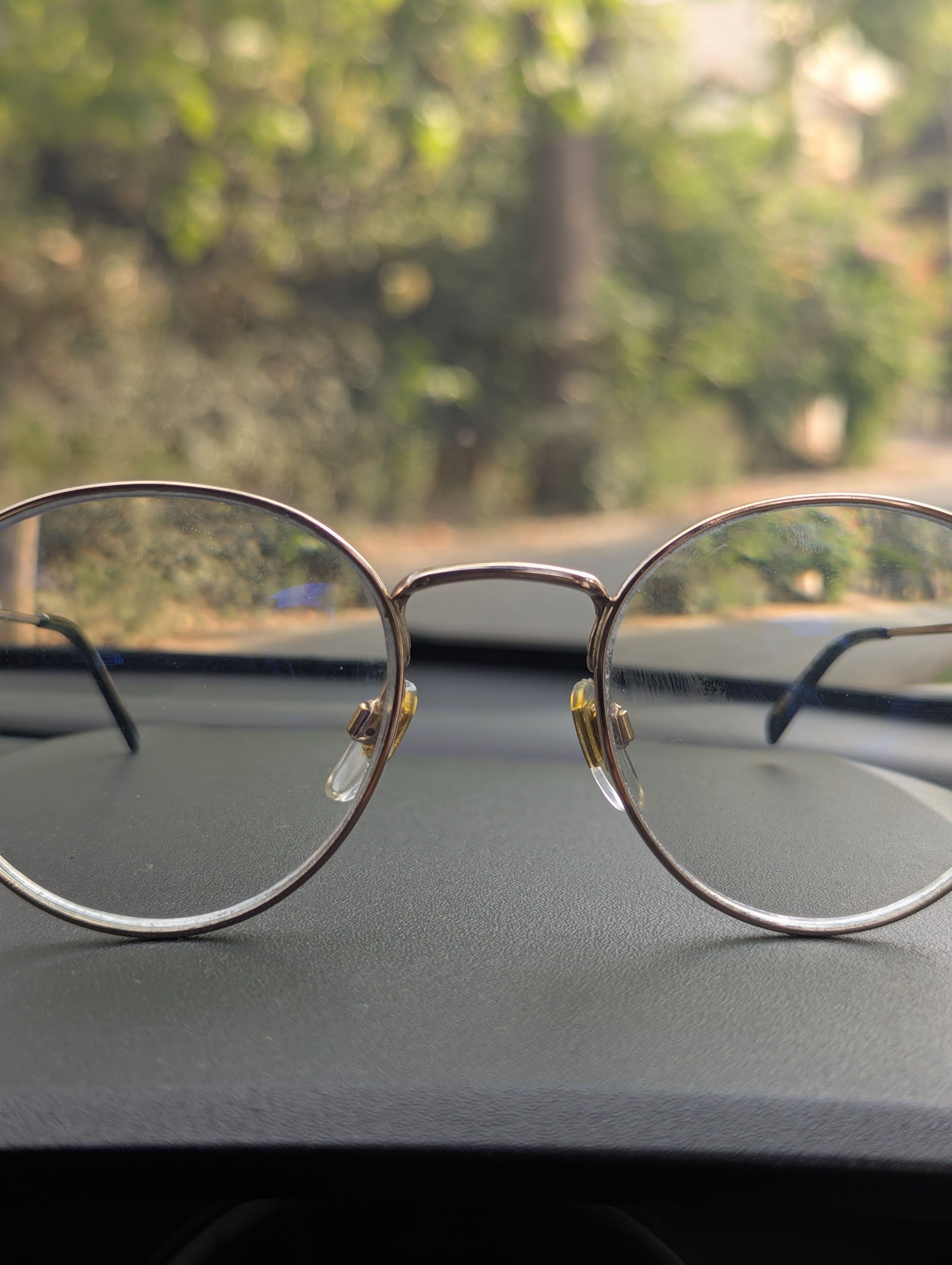
It was a complete failure of the school system for me to not have received any help from those around me as a child. This applies both to my vision and my learning disabilities. My vision did not worsen overnight – it was bad since I was a child, and got progressively worse until it began to interfere with life. It is a similar story with my inattentiveness and hyperactivity. Disabilities are not static! My vision gets better sometimes every few years, then it gets worse. Just a thought.
Aids, however, must not be allowed to come and go. They need to be institutionalized. Currently, in my station as a university instructor, it is me deciding everything hence my students have an easier time as compared to their other courses. If I leave, it will change for the worse; I know it. Around February of 2016, Sir Anwari had to leave due to health reasons and in came a new teacher famous on the cram-school circuit for his detailed notes. He did not give individual feedback, and just told people “follow the notes” i.e. fall in line. Let’s just call him M, as he is still active in Lahore. His methods did not work for me, or rather, worked against me. Bordering on being an A grader in the subject under Sir Anwari (and improving), I immediately failed in the next exams. It was the first time in my life I failed outright in any exam. I still remember the dread I felt when I heard Sir Anwari had to leave. In the lead up to my final exams for that subject I abandoned all of Mr. M’s mandated studying methodology and went back to Sir Anwari’s methodology, which led me to recover to a C. I recovered, but that C had a knock-on effect on my life that I can’t really explain in this piece. It could’ve been entirely avoided if the aids provided to me were institutionalized, and my life would have probably been much different. I do not regret who I am, but I do mourn every child going through these processes currently without institutionalized help.
That summer, Sir Anwari passed away. Rest in Peace, old man! He used to clap his hands and say “Jee bachay!” (“Okay, kids!”) to start the class. I felt immense guilt upon receiving my grades not just towards myself or my parents, but because I didn’t honour Sir Anwari’s efforts invested in me.
I also clap my hands to start the class - ten years on. He impacted me profoundly in ways I find out as I grow older.
That is not to say his impact hasn’t been felt until now. I sat and really thought about my problems as a student that summer he passed. Thereon out is when I really learned about my weaknesses and strengths, studying in a manner that would suit them. I did pretty well the next two years in school, but my disorder caught up with me again. I’d fight back, and it’d come back again. It came and went, and still does. There are a handful of episodes in my life where I can picture a fork in my destiny being decided purely by my lack of focus and general dysfunction. And yet now I feel like I own the direction I’m walking in!
You can’t make my vision perfect. Yeah, I could get Lasik, but there’s complications I’d like to avoid. But see? I don’t HAVE to get Lasik! I have agency due to the simple fact that I have glasses. They’re also pretty! I’ve seen some kickass wheelchairs too. Canes! Disability aids can be fashionable; that’s yet another way they grant people agency.
Don’t take people by the hand too many times. After the first few times…
Get them glasses!
Let them live and make choices. Allow us life.
/end
Long read again! I’m quite happy I was able to write something long-form for the blog again, and hold hope I can do it many more times. I would like to make them progressively longer too, even if this one was shorter than eyes open to dream. It is still valuable to me as it it is a very personal topic. Then again, all of what I talk about ends up being personal. Bit of an open book.
I hope I will have more like this in the future. If you got this far and haven’t subscribed (I say again: mental!), here’s a button you can press:
Today’s track was “Hope in Work and Joy in Leisure” - by British alt-rock band Sea Power, for the game Disco Elysium. Yes, yes, I know: another track from that game? Yes. Go play it!
I’ll see you guys again. Take much care and don’t yank around many blind fellas like myself!
Yours where we see castles in the distance,
Saad.
Hey! Nice drama with the audio thing
Hi and welcome back, friend.
This one was quite a rollercoaster, but I enjoyed it. Wouldn't mind seeing more longform pieces like this btw.
Sorry you had such a myopic period in school though. Thankfully, these days, there's a lot more awareness about accessibility in general. You can see this shift even in consumer products such as games -- there are now options for colorblind people, deaf people, etc. If anything, I'd take that as a positive sign.
I don't really know Sir Anwari, but from everything you've written here, I think he'd be happy that you ended up taking the spirit of his lessons and started applying them in your own classes. Really, I think any teacher would be proud that they passed the torch. It probably means a lot more to them than a kid scoring good in their subject anyway.
Anyway, I'm glad that someone understands that it's all about agency. It's not about bending over backwards at every turn for somebody. It's about giving them the ability to feel like somebody in the first place.
P.S: Do you know that IQ tests weren't initially intended as a measure for intelligence, but were instead about identifying children with learning disabilities so that they could receive more help?